一、平台概况
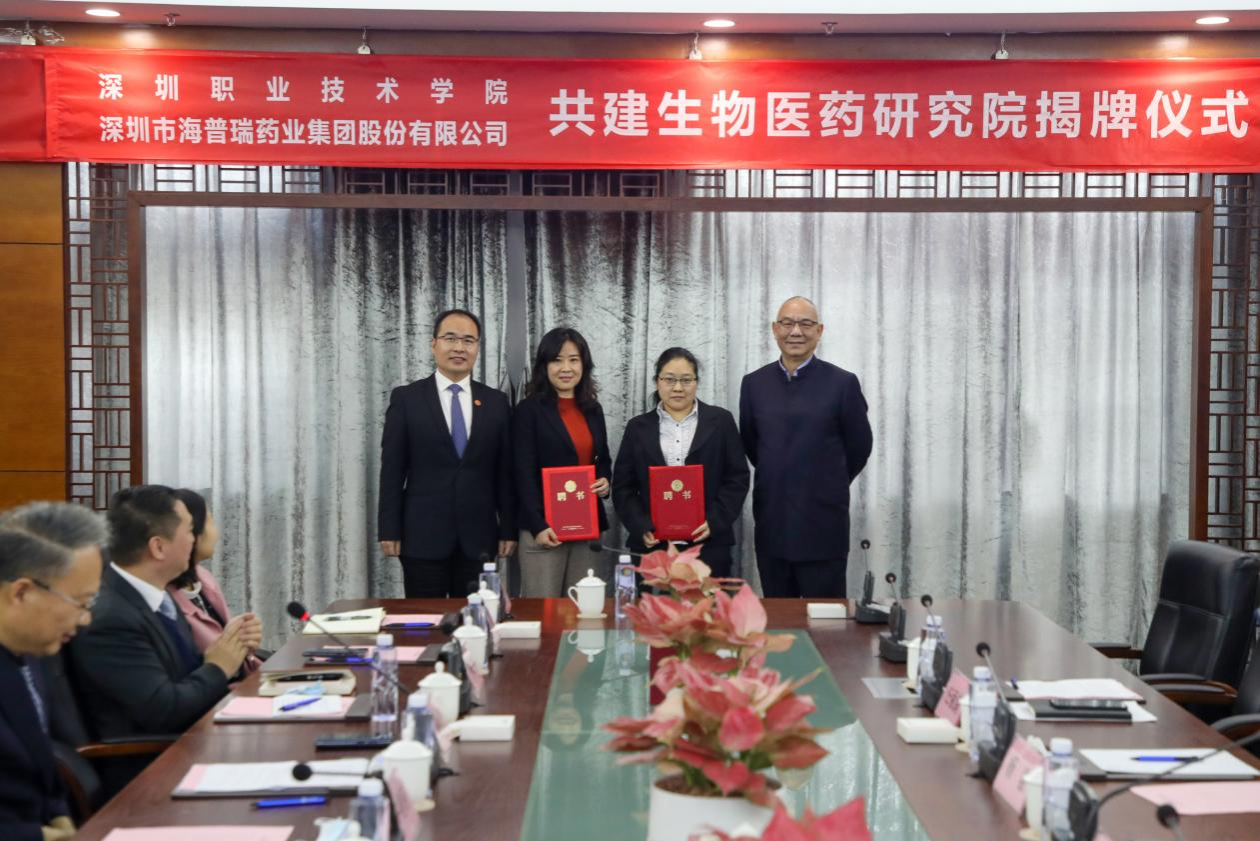
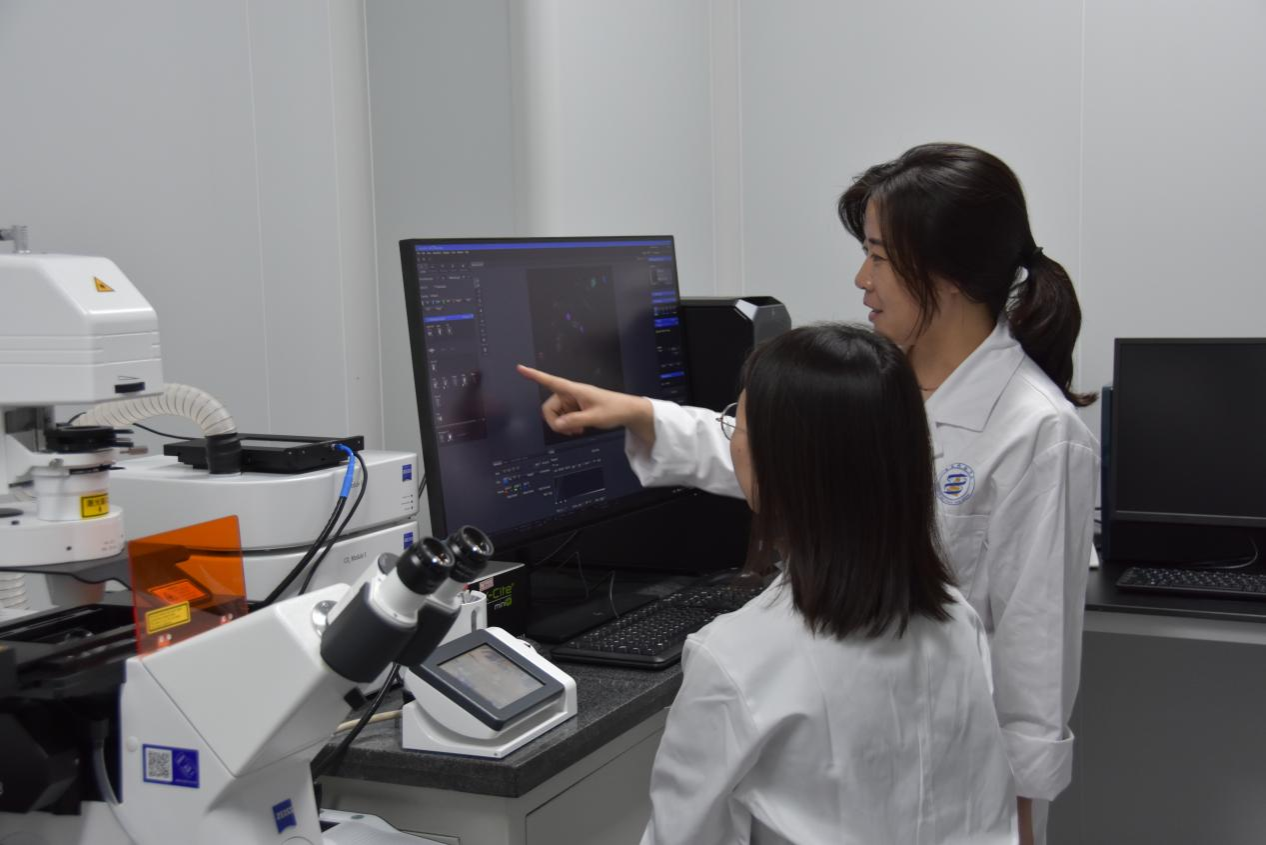
2021年,深圳职业技术大学食品药品学院与深圳市海普瑞药业集团股份有限公司携手共建的,在深圳职业技术大学正式揭牌成立。研究院科研硬件配置完善,配备超高分辨质谱、四级杆飞行时间质谱仪、高通量液态悬浮芯片系统、激光共聚焦显微镜、全自动共聚焦荧光活细胞成像仪、分选流式细胞仪、细胞能量代谢仪、小动物三维活体成像-Micro CT联用分析仪、高密度发酵罐、微胶囊机等一系列先进的分析检测、功效评价与工艺研发仪器设备,为开展科研工作和提供技术服务奠定了坚实的硬件基础。
二、平台定位
研究院紧扣深圳市20+8产业集群的生物医药战略新兴产业集群和细胞药物、基因治疗未来产业技术需求,聚焦生物药新药创制开展高水平基础研究与应用基础研究,着力突破生物医药领域关键核心技术,为海普瑞药业、深圳乃至粤港澳大湾区生物医药企业提供新药研发、产品试制和成果转化服务,逐步建成具有辐射引领作用的高水平新药研发基地和工程转化基地。
三、主要研究方向
研究院以多糖类药物研发为核心方向,依托合作企业强大的原料供应能力和研发能力,以肝素、低分子肝素为研发切入点,形成以下四大研究方向:
1.肝素钠新适应症开发:肝素钠、低分子肝素钠在临床应用中除了典型的抗凝、抗栓作用外,还表现出抗炎、调节血脂、抗病毒、抗肿瘤、防止血栓形成等活性。研究院搭建了多维度药效评价平台,拓展肝素类多糖药物的潜在临床价值。
2.单一组分寡糖药物的研发:肝素作为一种糖胺聚糖,可在体内与数百种蛋白相结合,不同寡糖序列与蛋白的亲和力存在差异,对应的生理及药理活性也各不相同。开发单一序列寡糖药物,是拓展糖类药物适应症、显著增强疗效的有效途径。研究院致力于通过优化化学酶法合成寡糖或多糖的实验条件,推动单一组分寡糖药物的研发进程。
3.全新多糖改构衍生物的药用研发:通过改变肝素发挥抗凝作用的核心五糖结构,进一步凸显肝素衍生物抗炎、抗肿瘤等其他药理作用。同时构建精准的定量构效关系模型,以期获得基于多糖改构衍生物的新药候选化合物。
4.肝素的药代动力学研究:围绕肝素的体内含量难以测定的技术瓶颈,研究院开发出一种将肝素的活性五糖域裂解出来,直接对五糖结构域的糖链进行定量的新型分析检测方法。目前该方法已完成测定条件的选择和优化,正在对以肝素钠为原料的制剂进行体内药代动力学研究与体内表征的整体评价,力争形成体内研究共性技术。
四、平台图片展示
五、联系方式
联系人:孙海燕
邮箱:susan@szpu.edu.cn
I. Platform Overview
The Hepalink Biomedical Research Institute, jointly established by the School of Food and Pharmaceutical Sciences, Shenzhen University of Professional Technology, and Shenzhen Hepalink Pharmaceutical Group Co., Ltd., was officially inaugurated at Shenzhen University of Professional Technology. The institute is equipped with comprehensive and advanced scientific research facilities, including ultra-high resolution mass spectrometry, quadrupole time-of-flight mass spectrometer, high-throughput liquid suspension chip system, laser confocal microscope, fully automated confocal fluorescence live cell imager, flow cytometer, cell energy metabolism analyzer, small animal 3D in vivo imaging system coupled with Micro CT, high-density fermenter, microcapsule machine, and other sophisticated instruments for analytical testing, efficacy evaluation and process development. These facilities provide a solid hardware foundation for scientific research and technical services.
II. Platform Positioning
The institute closely aligns with the strategic emerging biomedical industry cluster and the technological demands of future industries such as cellular therapeutics and gene therapy under Shenzhen’s “20+8” industrial cluster initiative. Focusing on high-level basic and applied basic research for innovative biologic drug discovery, it strives to break through key core technologies in the biomedical field. The institute provides new drug R&D, pilot production and achievement transformation services for Hepalink Pharmaceutical and biomedical enterprises in Shenzhen and even the Guangdong-Hong Kong-Macao Greater Bay Area, aiming to gradually build itself into a high-level new drug R&D base and engineering transformation base with radiation-driven and leading roles.
III. Major Research Directions
Centered on the R&D of polysaccharide drugs, and relying on the strong raw material supply and R&D capabilities of the cooperative enterprise, the institute takes heparin and low-molecular-weight heparin as the starting point, and has formed four major research directions:
1. Development of new indications for heparin sodium
In addition to its classic anticoagulant and antithrombotic effects, heparin sodium and low-molecular-weight heparin sodium also exhibit anti-inflammatory, lipid-regulating, antiviral, antitumor and antithrombotic activities in clinical applications. The institute has established a multi-dimensional pharmacodynamic evaluation platform to explore the potential clinical value of heparin-based polysaccharide drugs.
2. R&D of single-component oligosaccharide drugs
As a glycosaminoglycan, heparin can bind to hundreds of proteins in vivo. Different oligosaccharide sequences have different affinities for proteins and corresponding distinct physiological and pharmacological activities. The development of single-sequence oligosaccharide drugs is an effective approach to expand the indications of carbohydrate drugs and significantly enhance therapeutic efficacy. The institute is committed to optimizing the experimental conditions for chemoenzymatic synthesis of oligosaccharides or polysaccharides to accelerate the R&D of single-component oligosaccharide drugs.
3. Pharmaceutical R&D of novel structurally modified polysaccharide derivatives
By modifying the core pentasaccharide structure responsible for the anticoagulant activity of heparin, the institute further highlights other pharmacological effects of heparin derivatives such as anti-inflammatory and antitumor activities. Meanwhile, a precise quantitative structure-activity relationship model will be constructed to obtain new drug candidate compounds based on structurally modified polysaccharide derivatives.
4. Pharmacokinetic studies of heparin
Targeting the technical bottleneck of difficult determination of heparin content in vivo, the institute has developed a novel analytical method that cleaves the active pentasaccharide domain of heparin and directly quantifies the pentasaccharide moiety. The selection and optimization of detection conditions have been completed. Currently, pharmacokinetic studies and overall in vivo characterization evaluations are being conducted on heparin sodium-based preparations, with the goal of forming a universal technology for in vivo research.
Contact Information
Contact Person: Haiyan Sun
Email: susan@szpu.edu.cn



 当前位置:
当前位置: